By: Kenneth Appiah Bani
Gracias, La Leyenda Messi.
Gracias, El Matador.
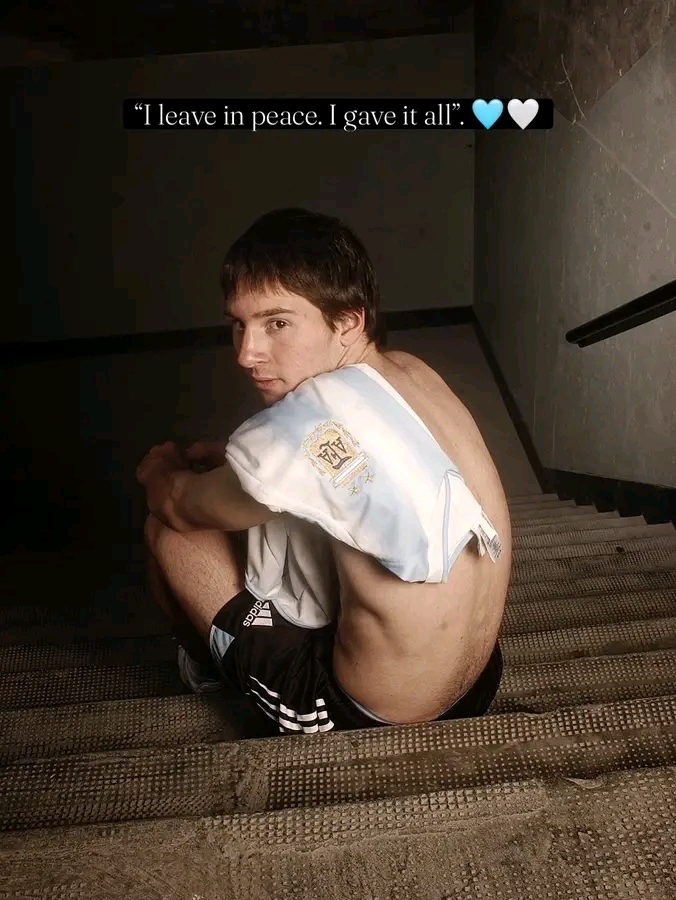
The last dance has come to an end. The final bow has been taken.
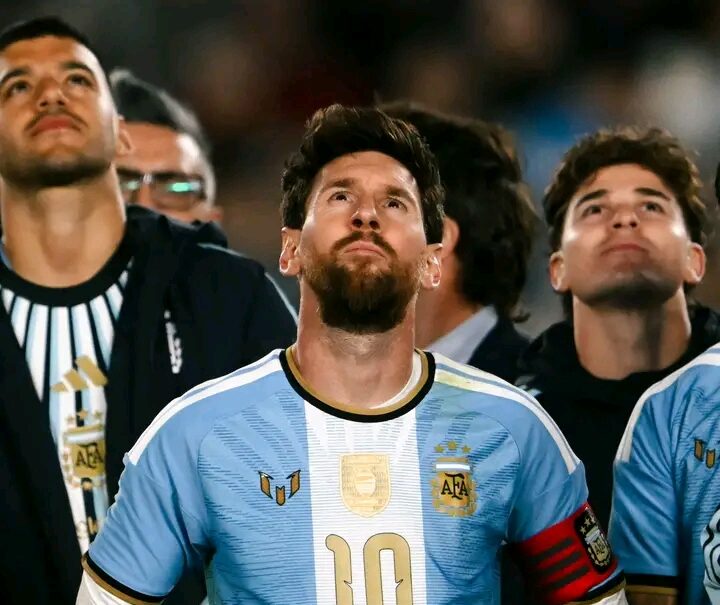
Lionel Andrés Messi has played his final game for Argentina, bringing an extraordinary international journey to a close on a historic night in Buenos Aires.
For more than two decades, Messi carried the hopes, dreams and emotions of an entire nation on his shoulders. From a young boy growing up in Rosario to a global football icon and World Cup-winning captain, his journey has been filled with extraordinary success, painful setbacks, perseverance and, ultimately, redemption.
His farewell could hardly have been more fitting.
At the Más Monumental Stadium, Messi captained Argentina to a 3–0 victory over Benin, ending his international career with a goal and two assists.
La Pulga — “The Flea” — left the stage the same way he had occupied it for more than 20 years: creating magic.
The boy from Rosario.
Lionel Andrés Messi was born on June 24, 1987, in Rosario, Argentina, into a working-class family with a deep love for football.
From an early age, his talent was obvious. But behind the remarkable footballer the world would eventually celebrate was a child facing a serious challenge.
At the age of 11, Messi was diagnosed with a growth hormone deficiency. The condition required nightly injections, creating a financial burden for his family as they tried to support his football dreams.
His life changed when FC Barcelona agreed to help cover the cost of his medical treatment.
At just 13 years old, Messi moved to Spain and joined Barcelona’s famous La Masia academy.
It was the beginning of a journey that would transform world football.
From La Masia to global superstardom.
Messi quickly stood out at La Masia, where his extraordinary close control, vision, acceleration and ability to score goals made him one of the academy’s most exciting young players.
In 2004, at just 17 years old, he made his official first-team debut for Barcelona.
What followed was an era of dominance.
Over a 17-year senior career with Barcelona, Messi won 10 La Liga titles and four UEFA Champions League crowns. He became the club’s all-time leading goalscorer, scoring 672 goals in 778 appearances.
Individually, his achievements were just as remarkable.
Messi won four consecutive Ballon d’Or awards between 2009 and 2012. In 2012, he scored an astonishing 91 goals in a calendar year, setting one of the most remarkable records in football history.
Barcelona was where Messi became Messi.
But his story did not end there.
A new chapter in Paris and Miami.
After spending the majority of his career at Barcelona, Messi moved to Paris Saint-Germain in 2021.
During his time in Paris, he won two Ligue 1 titles before moving on to a new challenge.
In 2023, Messi joined Inter Miami CF in Major League Soccer.
His arrival transformed the profile of the club and brought global attention to football in the United States. Messi quickly made an impact, helping Inter Miami achieve domestic success while continuing to add to his extraordinary collection of goals and trophies.
His career numbers have continued to reach historic levels, with Messi now credited with more than 900 senior career goals.
The pain of playing for Argentina.
While Messi conquered club football, his relationship with Argentina was initially far more complicated.
For years, international glory remained the missing piece of his career.
He suffered heartbreaking defeats in major international finals, including the 2014 FIFA World Cup final and Copa América finals.
The criticism was intense.
Some questioned whether Messi could truly be considered one of the greatest players of all time without winning a major trophy with Argentina.
The pressure became so great that after Argentina’s defeat in the 2016 Copa América final, Messi briefly announced his retirement from international football.
But he returned.
And that decision changed the story forever.
Redemption with the national team
In 2021, Messi finally lifted his first major international trophy with Argentina when La Albiceleste defeated Brazil in the Copa América final at the Maracanã.
It was an emotional moment for Messi and millions of Argentine supporters.
The following year, Argentina defeated Italy in the Finalissima, adding another major international honour to Messi’s collection.
Then came Qatar.
The World Cup that changed everything
At the 2022 FIFA World Cup, Messi produced one of the greatest individual tournaments of his career.
Argentina suffered a shocking defeat to Saudi Arabia in their opening match, but Messi and his teammates responded with determination.
They went on to reach the final, where they faced France in one of the greatest World Cup matches ever played.
Messi scored twice as Argentina eventually defeated France on penalties after a dramatic 3–3 draw.
When Messi lifted the World Cup trophy in Lusail, the image became one of the defining moments in sporting history.
The trophy that had eluded him for so long was finally his.
Messi was also awarded the Golden Ball as the tournament’s best player.
The victory changed his relationship with Argentina forever.
The player who had once been heavily criticised became the national hero who had delivered the country’s first World Cup since 1986.
More glory and an unforgettable legacy.
Messi’s success with Argentina continued.
In 2024, he helped Argentina win another Copa América title, further strengthening his status as one of the greatest international footballers of all time.
Across his international career, Messi leaves the Argentina shirt having made 208 appearances, scored 126 goals and provided 67 assists, according to the figures accompanying his farewell.
His international honours include the FIFA World Cup, two Copa América titles and the Finalissima.
He also leaves the international stage as Argentina’s captain and one of the most influential figures in the country’s football history.
The final bow in Buenos Aires
The final chapter arrived at the Más Monumental Stadium in Buenos Aires.
Messi’s final appearance for Argentina against Benin was more than a football match. It was a farewell ceremony for a player who had become almost inseparable from the identity of the national team.
Argentina won 3–0, and Messi ensured that his final night would be remembered for more than emotions.
He scored.
He assisted twice.
He created.
He celebrated.
And then came the tears.
Messi struggled to hold back his emotions after the final whistle. His teammates also had tears in their eyes as they shared one of the most emotional moments in Argentina’s recent football history.
The stadium celebrated a legend who had given the nation more than two decades of unforgettable memories.
The young boy from Rosario had finally taken his final steps away from international football.
A career beyond comparison.
Messi’s story with Argentina is only one part of a career that has already entered football folklore.
His career figures now stand at approximately:
- 🏟️ 1,178 appearances
- ⚽ 932 goals
- 🎯 426 assists
- 🔥 1,358 goal contributions
Those numbers tell only part of the story.
Statistics can count goals and assists, but they cannot measure the emotions Messi created.
They cannot measure the silence inside a stadium before one of his free-kicks.
They cannot measure the anticipation when he received the ball with defenders surrounding him.
They cannot measure the celebrations that followed his goals or the tears that came after his defeats.
That is the difference between a great player and a sporting icon.
The legend leaves the stage
Messi has played in three World Cup finals with Argentina, reaching the 2014 final in Brazil, winning the 2022 final in Qatar, and leading Argentina to the 2026 final in North America.
He also guided his country to Copa América glory and the Finalissima.
His international journey included heartbreak, criticism, retirement, a return and ultimately a period of unprecedented success.
His comeback was classic and transformative.
The player who once walked away from international football returned to lead Argentina to the biggest prizes in the sport.
That story alone would be enough to define a career.
But Messi gave Argentina much more.
He gave them memories.
He gave them trophies.
He gave them moments that generations yet unborn will hear about.
“This shirt was my dream, my pride, and my life”
In his emotional farewell message, Messi reflected on what the Argentina shirt meant to him.
«“This shirt was my dream, my pride, and my life for years.”»
There may be no better description of his relationship with the national team.
The shirt represented a childhood dream. It became a source of immense pressure. It brought tears after painful defeats and unforgettable joy after historic victories.
Messi also thanked the supporters who remained with him throughout the journey.
«“Thank you for loving me so much, thank you for your support. I will always carry you with me.”»
Those words reflect how dramatically his relationship with Argentine fans changed.
There were years when Messi was questioned and criticised. Today, he is celebrated as the captain who finally brought the World Cup back to Argentina.
Dr. Lionel Andrés Messi
To crown an already extraordinary farewell night, Messi was presented with an Honorary Doctorate Award, adding another remarkable distinction to his legacy.
From a young boy who left Rosario at 13 to pursue his football dream to a global sporting icon receiving an honorary doctorate, Messi’s journey has been extraordinary.
He has become more than a footballer.
He has become a cultural figure whose influence stretches far beyond the pitch.
Generations will remember.
Words and adjectives struggle to fully describe what Lionel Messi has produced on the international stage.
For more than two decades, he gave football fans magical moments.
Generations yet unborn will hear stories of the little magician from Rosario who became an Argentine legend.
They will hear about La Pulga, the player who seemed almost impossible to stop.
They will hear about the goals, the assists, the dribbles, the free-kicks, the World Cup, the Copa América titles and the unforgettable nights in the blue and white.
They will hear about the tears too.
Because Messi’s story was never perfect.
It was human.
He lost finals. He was criticised. He walked away. He returned. He kept fighting.
And eventually, he reached the top.
The final dance
The final dance is over.
The final bow has been taken.
Lionel Andrés Messi has walked away from international football as a World Cup champion, a multiple-time Copa América winner, Argentina captain and one of the greatest footballers to ever play the game.
He leaves behind 208 international appearances, 126 goals and 67 assists, alongside trophies that include the World Cup, two Copa América titles and the Finalissima.
He leaves behind memories that cannot be measured by statistics.
He leaves after scoring and assisting twice in his farewell game.
And he leaves with the love of a nation that once demanded everything from him and eventually learned to simply appreciate the privilege of watching him play.
Gracias, La Leyenda Messi.
Gracias, El Matador.
Walk on, legend.
You were in a class of your own.
The Lionel Messi era with Argentina has come to an end.
And football will never be quite the same again.