By : Kenneth Appiah Bani
Ghana and Trinidad and Tobago are seeking to deepen their longstanding relationship through new investment opportunities and closer cooperation in the oil and gas sector.
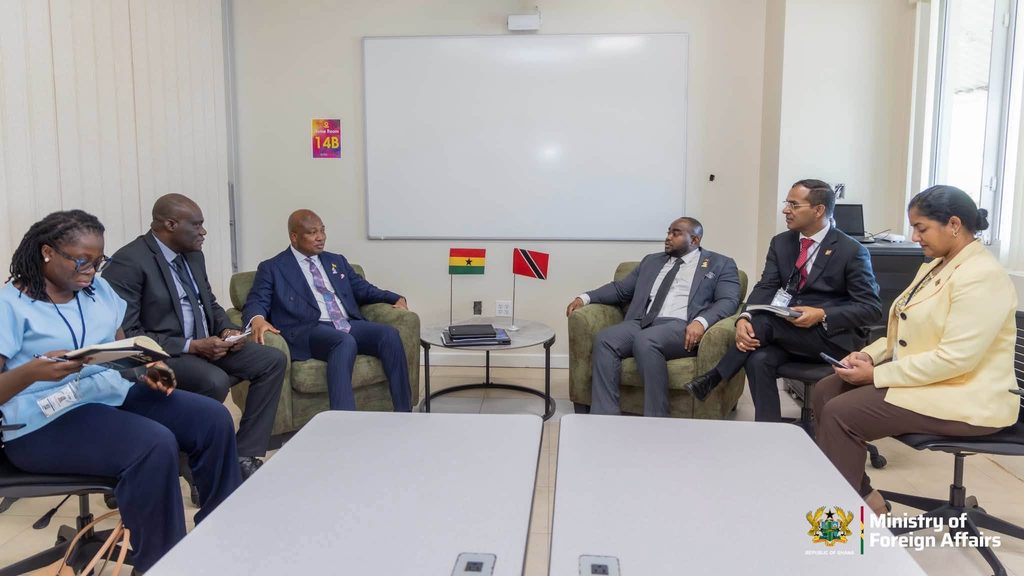
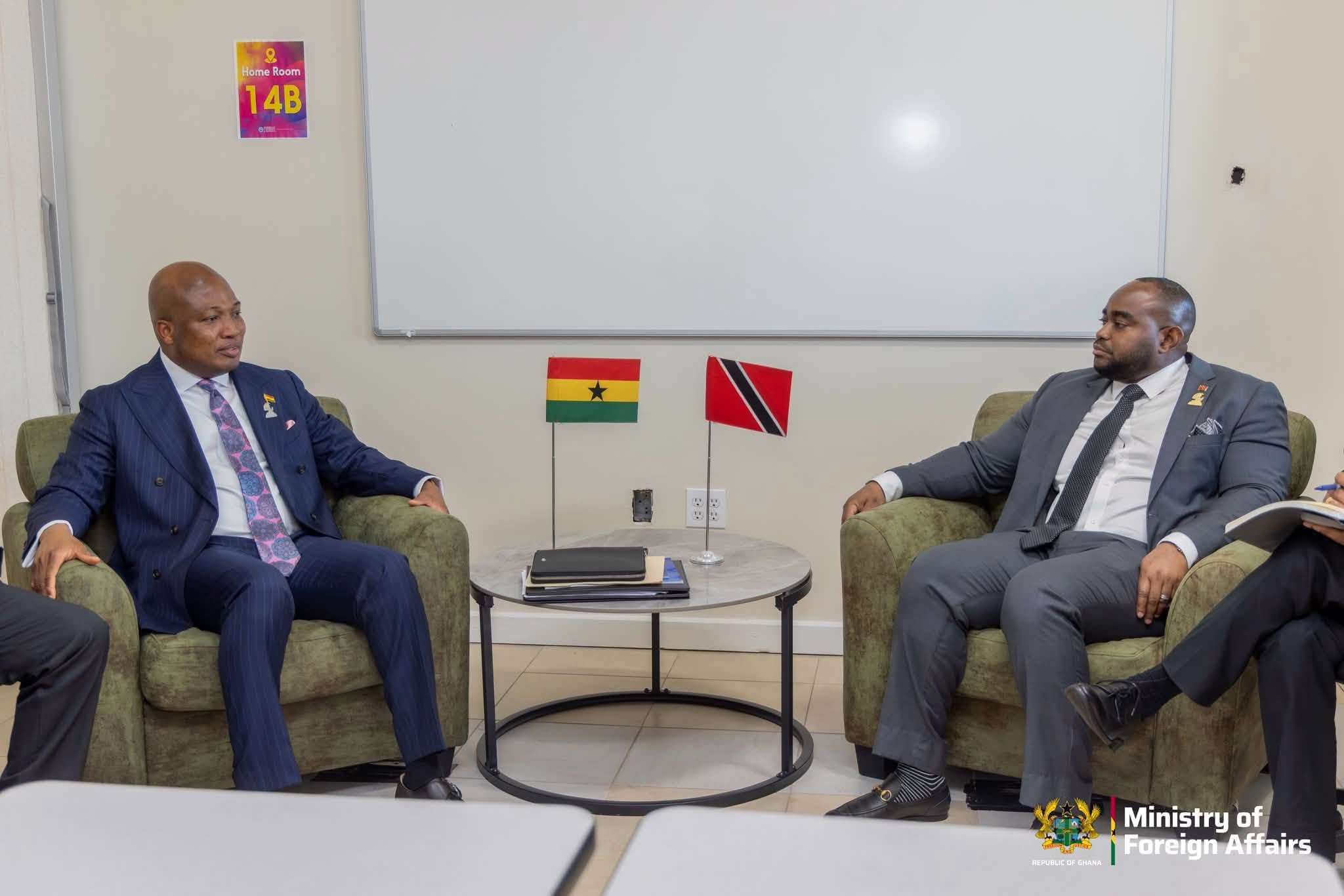
The prospect of stronger economic ties was among the issues discussed when Ghana’s Minister for Foreign Affairs, Hon. Samuel Okudzeto Ablakwa, met Trinidad and Tobago’s Foreign Minister, His Excellency Sean S. M. Sobers, MP, on the sidelines of the Commonwealth Heads of Government Meeting in Antigua and Barbuda.
The meeting offered both ministers an opportunity to review the relationship between their countries and consider areas where cooperation could grow. Their discussions focused on attracting new investments and expanding existing partnerships in oil and gas—sectors with the potential to create commercial opportunities, support economic development and strengthen connections between businesses in both countries.
Ghana and Trinidad and Tobago share historical and cultural ties, as well as common interests as countries in the Commonwealth and the wider global community. Their relationship also carries practical significance: both have experience in the energy sector and a shared interest in building sustainable, mutually beneficial economic partnerships.
For Ghana, closer engagement with Trinidad and Tobago could support efforts to attract investment and build partnerships across the oil and gas value chain. For Trinidad and Tobago, deeper ties with Ghana offer an opportunity to expand engagement with a key West African economy.
The ministers’ discussions reflect a wider ambition to move the relationship forward through concrete areas of cooperation. Investment, energy and diplomatic engagement can each contribute to stronger links between the two countries, while regular contact between their governments can help identify opportunities and advance shared priorities.
A significant development in the relationship is Ghana’s plan to commission a new High Commission in Trinidad next year. His Excellency William Anani Abotsi is expected to become Ghana’s first High Commissioner to Trinidad and Tobago.
The opening of the mission will establish a permanent Ghanaian diplomatic presence in the country. It is expected to strengthen communication between the two governments and provide a focal point for advancing cooperation. A resident mission can also help businesses, institutions and citizens connect with relevant partners and information.
The appointment of a first High Commissioner gives added importance to the planned opening. It signals Ghana’s intention to give its relationship with Trinidad and Tobago greater diplomatic attention and to build on the discussions already underway between the two foreign ministries.
Oil and gas formed a central part of the ministers’ talks. Both countries have an interest in developing partnerships that can support investment and deepen commercial engagement in the energy sector.
The discussion of expanded cooperation creates an opening to explore how experience and expertise might be shared, how investment opportunities could be identified, and how businesses and institutions in both countries might work together. Sustained government engagement can help provide the connections needed to turn areas of shared interest into practical initiatives.
The opportunity extends beyond individual projects. Stronger energy partnerships can contribute to broader economic ties, including trade, professional exchanges and connections between companies. Regular dialogue can help both sides assess where cooperation is most useful and how it can deliver lasting value.
Ablakwa’s participation in the Commonwealth Heads of Government Meeting also provided a platform for Ghana to engage with international partners on matters affecting Africa and the wider global community.
Among the priorities raised were reforms to the United Nations and the international financial architecture. Ghana has also highlighted issues including artificial intelligence regulation, climate justice, resource sovereignty, reparatory justice and conflict resolution.
These issues are closely connected to questions of representation, fairness and the ability of countries to shape decisions that affect their people and economies. Ghana’s engagement with international allies is intended to help advance Africa’s case for reforms and to build support for a more inclusive global system.
The minister’s meeting with his Trinidad and Tobago counterpart took place within this broader diplomatic effort. Ghana’s partnerships with Commonwealth countries can support cooperation on bilateral priorities while also creating space for discussion on shared international concerns.
The meeting between the two foreign ministers established a positive basis for further engagement. The next step will be to build on the discussions by identifying specific opportunities in investment and energy cooperation and by maintaining close contact as the new Ghanaian High Commission is established.
Diplomatic missions, ministerial exchanges and business engagement can all help sustain progress. A permanent Ghanaian presence in Trinidad would give the two countries an additional channel for developing their relationship and supporting cooperation between their public and private sectors.
The focus on new investment and oil and gas partnerships reflects a shared interest in making the relationship more economically active. With continued dialogue and practical follow-through, Ghana and Trinidad and Tobago can strengthen their ties in ways that serve both countries.
The planned High Commission and the ministers’ discussions mark an important moment in that process. They point to a relationship with room to grow—rooted in longstanding connections and directed toward future cooperation.