
By: Kenneth Appiah Bani
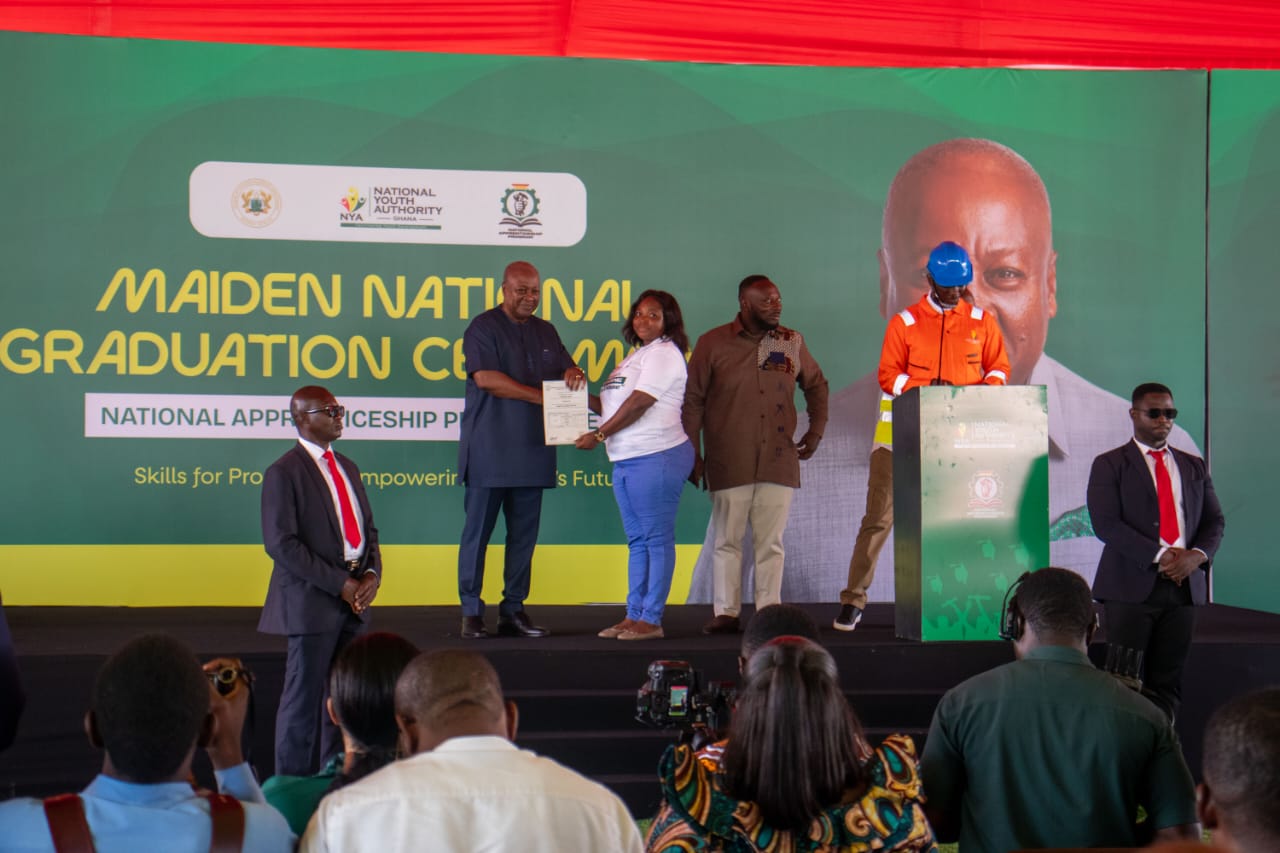
A total of 13,309 trainees have graduated from the National Apprenticeship Programme (NAP) at its maiden National Graduation Ceremony held at the State House in Accra.
The graduation ceremony marks a major milestone in the government’s efforts to promote skills development, improve employability and create economic opportunities for young people across the country.
Out of the 13,309 graduates, females accounted for the majority, with 10,325 representing 78 per cent of the total number. Male graduates numbered 2,984, representing 22 per cent.
The figures highlight the significant participation of women in the programme, which seeks to provide young Ghanaians with practical vocational and technical skills to improve their prospects in the job market.
However, the participation of Persons with Disabilities (PWDs) fell below the target established before the programme commenced.
A total of 112 persons with disabilities graduated from the programme, falling short of the 5 per cent inclusion target. This points to the need for further efforts to improve access to apprenticeship opportunities for persons with disabilities and ensure that skills development initiatives are inclusive.
The National Apprenticeship Programme is aimed at equipping young Ghanaians with employable skills through hands-on training and practical apprenticeship opportunities.
The initiative is expected to help bridge the gap between education and the labour market by preparing beneficiaries for employment and self-employment.
Beyond providing technical and vocational skills, the programme is also intended to encourage entrepreneurship by giving young people the practical knowledge needed to establish and manage their own businesses.
The graduation of the 13,309 trainees is therefore an important step towards strengthening Ghana’s skilled workforce and expanding opportunities for young people to participate in the country’s economic development.
However, the programme’s long-term impact will largely depend on the ability of graduates to translate the skills acquired into sustainable employment and business opportunities.
The shortfall in disability participation also presents an opportunity for programme organisers to review their inclusion strategies and introduce measures to ensure greater participation of persons with disabilities in future training cycles.