By: Kenneth Appiah Bani
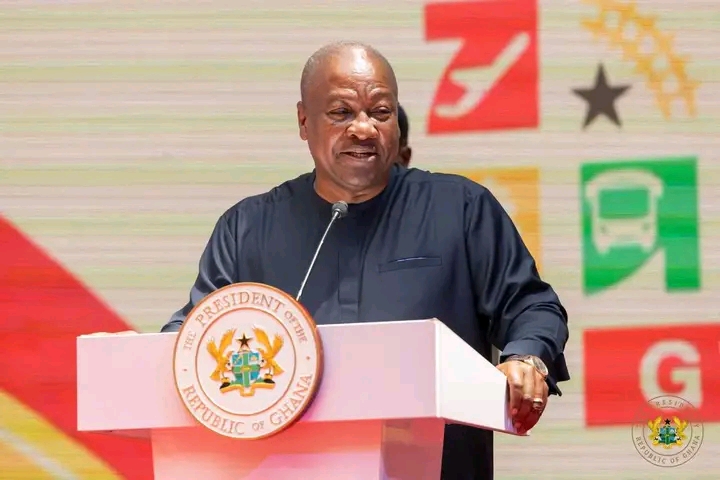
President John Dramani Mahama has raised concerns over what he describes as Ghana’s failure to pay sufficient attention to some critical areas of football development, particularly the identification and nurturing of young talents.
According to the President, Ghana’s football development system has not done enough to systematically discover, train and support promising young players who could eventually become stars for the national teams.
President Mahama noted that while Ghana has historically invested significant resources in football, greater attention needs to be given to the foundation of the sport, including grassroots development and the creation of sustainable pathways for young talents.
He stressed that identifying talented youngsters at an early stage and providing them with the appropriate coaching, facilities and competitive opportunities is essential if Ghana is to maintain its position as a major footballing nation.
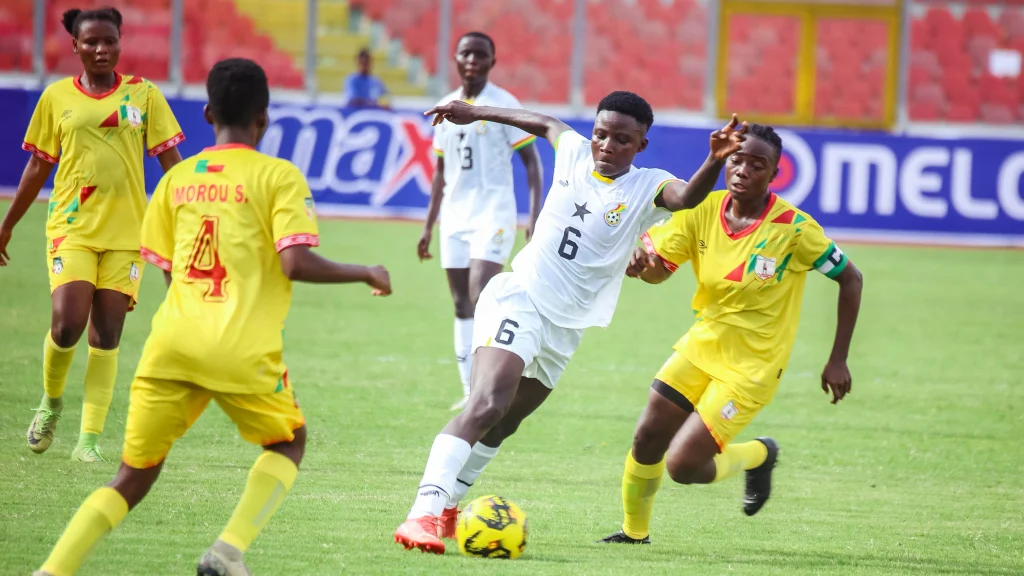
The President also drew attention to the achievements of Ghana’s women’s national teams, arguing that the country has arguably enjoyed greater success in women’s football than in the men’s game in terms of trophies won.
He observed that this achievement is particularly significant given the comparatively greater financial resources that have traditionally been directed towards men’s football.
His comments have reignited discussions about the allocation of resources within Ghanaian football and whether investment is producing the desired results across the various levels of the game.
Ghana’s men’s football has enjoyed significant historical success, particularly at youth level, while the senior Black Stars have remained one of Africa’s most recognised national teams. However, recent performances have raised questions about the effectiveness of the country’s player-development system and the transition from youth football to the senior national team.
The women’s teams, meanwhile, have continued to provide Ghana with important successes on the continental stage. The Black Queens, for instance, have established themselves as one of Africa’s competitive women’s national teams, while Ghana’s junior women’s sides have also enjoyed notable achievements.
President Mahama’s remarks therefore point to the need for a broader reassessment of Ghana’s football development strategy.
Beyond spending more money, the challenge, he suggested, is ensuring that resources are directed towards areas capable of producing long-term results. This includes grassroots scouting, coaching education, youth academies, school football, infrastructure and welfare for young players.
A stronger development structure could also help reduce Ghana’s dependence on talents discovered only after they have already matured abroad. By establishing effective scouting and development systems locally, promising players could receive professional guidance from an early age and be better prepared for international competition.
The President’s comments also raise an important question about gender and resource distribution in Ghanaian football. If women’s teams have been able to achieve significant success despite receiving fewer financial resources, there may be lessons to be learned about planning, talent development, team preparation and institutional support.
For Ghana to regain consistency at the highest level, sustained investment in both men’s and women’s football will be necessary. However, such investment must be accompanied by effective administration, accountability and a deliberate strategy for developing the next generation of players.
President Mahama’s assessment ultimately places the spotlight on the need to look beyond immediate results and focus on building a football system capable of producing talented players and successful national teams for years to come.