By: Kenneth Appiah Bani
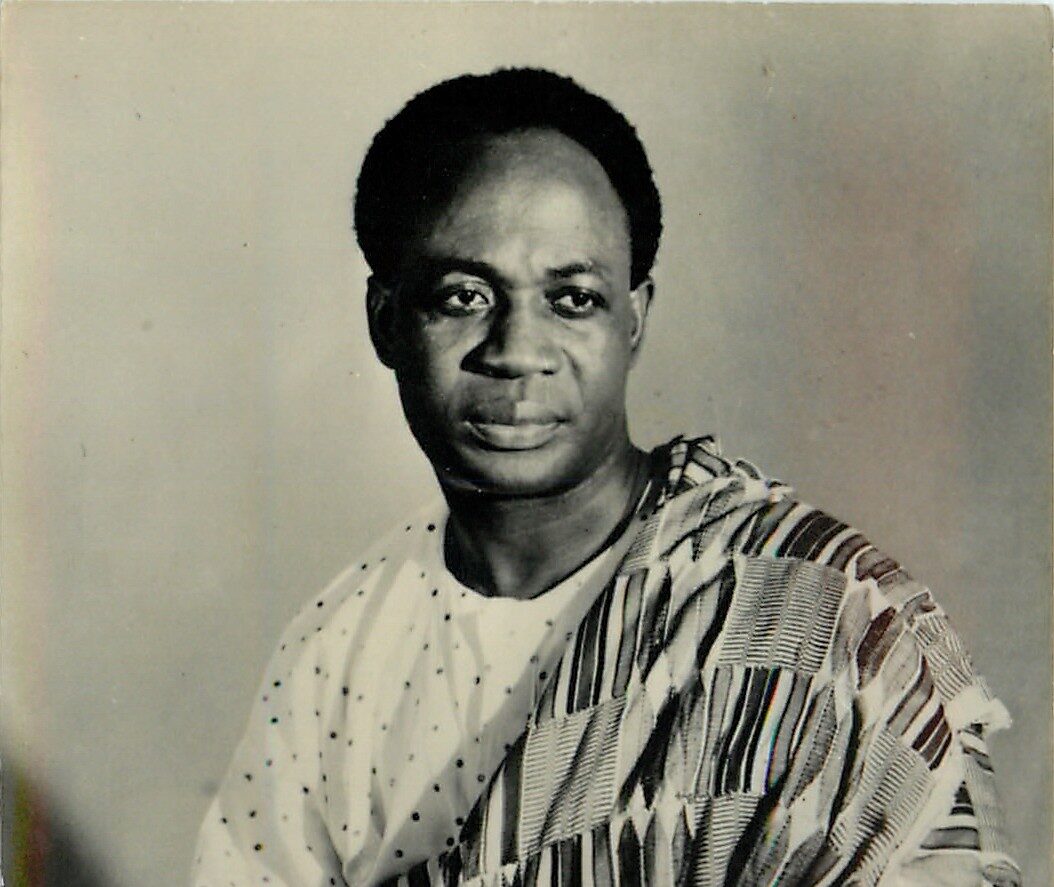
Every September 21, Ghana pauses to remember one of the most important figures in the country’s history — Osagyefo Dr. Kwame Nkrumah.
The day brings back memories of the struggle for independence, the birth of modern Ghana and a political vision that extended far beyond the country’s borders.
But beyond the wreaths, speeches, documentaries and historical photographs, Nkrumah’s birthday presents Ghana with a deeper question: What does independence mean to a generation that did not experience colonial rule?
Born on September 21, 1909, at Nkroful in the then Gold Coast, Kwame Nkrumah rose from humble beginnings to become Ghana’s first Prime Minister and later its first President. He also became one of the most prominent voices for African independence and unity.
On Monday, September 21, 2026, Ghana will mark his 117th birthday as Kwame Nkrumah Memorial Day.
For many Ghanaians, however, Nkrumah is more than a historical figure whose portrait appears in textbooks and public institutions. His name remains closely connected to Ghana’s struggle for independence and the broader Pan-African movement.
From Nkroful to the world
Nkrumah’s political journey took him far beyond his birthplace of Nkroful.
His education and years abroad exposed him to ideas surrounding colonialism, self-determination, Pan-Africanism and the political future of Africa. When he returned to the Gold Coast in 1947, he became actively involved in the struggle for self-government.
His political activism later led to the formation of the Convention People’s Party (CPP) in 1949. The party mobilised large sections of the population around the demand for independence and helped transform the struggle for self-government into a mass political movement.
The campaign for “Self-Government Now” resonated with a population that was increasingly unwilling to accept colonial rule as permanent.
Nkrumah became Prime Minister in 1952.
Five years later, on March 6, 1957, the Gold Coast became the independent state of Ghana, with Nkrumah as its first Prime Minister.
Ghana’s independence was not the achievement of one individual alone. It was the product of years of struggle involving political leaders, workers, traditional authorities, intellectuals, women, young people and ordinary citizens.
However, Nkrumah became the central political figure of the independence movement and emerged as one of the most recognisable leaders of the new African nation.
On July 1, 1960, Ghana became a republic, and Nkrumah became the country’s first President.

Independence beyond the flag
For Nkrumah, independence was not simply about replacing a colonial flag with a national one.
He viewed political independence as the beginning of a wider transformation that would give Africans greater control over their political and economic future.
His government pursued industrialisation, education, infrastructure development and the expansion of state institutions. His administration also promoted Ghana as a centre for African liberation movements and Pan-African political activity.
At the heart of his thinking was the belief that Ghana’s freedom could not be separated from the freedom of the rest of Africa.
His advocacy for African unity became one of the defining elements of his political philosophy. When the Organisation of African Unity was established in 1963, the idea of continental cooperation had already become a major part of Nkrumah’s political vision.

His famous call that “Africa must unite” continues to feature prominently in discussions about the continent’s political and economic future.
A legacy that must also be examined critically
Remembering Nkrumah does not require ignoring the controversies surrounding his time in office.
His supporters continue to point to his central role in Ghana’s independence, his Pan-African vision and his development agenda. At the same time, critics have raised concerns about the concentration of political power, restrictions on political opposition and economic challenges during his administration.
In 1964, Ghana became a one-party state under the CPP.
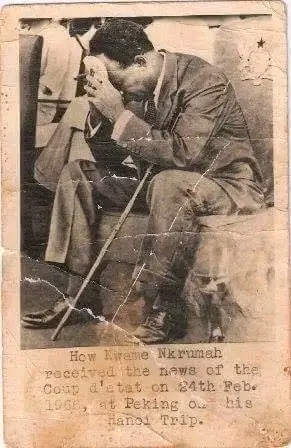
Two years later, on February 24, 1966, Nkrumah was overthrown in a military coup while he was on a state visit to Vietnam and China. He never returned to power.
Nkrumah spent his final years in exile and died in Bucharest, Romania, on April 27, 1972.
His political career therefore ended very differently from the triumphant celebrations that accompanied Ghana’s independence in 1957.
Yet his removal from office did not bring an end to the discussion about his ideas or his place in African history.
The man beyond the monument
Perhaps one reason Nkrumah continues to occupy such an important place in Ghana’s national consciousness is that his story is larger than his presidency.
It is the story of a colony that challenged an imperial system.
It is the story of a political movement that mobilised ordinary citizens and made them active participants in the struggle for self-government.
It is also the story of a leader whose political vision extended beyond Ghana to the broader question of what a politically independent and economically self-reliant Africa could become.
Decades after his death, Nkrumah’s ideas continue to generate discussion in schools, universities, political circles and homes across Ghana and Africa.
His legacy is therefore not simply something to celebrate. It is also something to study, question and critically engage with.
What does Nkrumah mean to today’s Ghana?
For a young Ghanaian born decades after independence, Nkrumah may exist mainly as a portrait in a history textbook, a statue seen during a school excursion or a name repeatedly mentioned during national celebrations.
But many of the questions he confronted remain relevant today.
How can Ghana create meaningful opportunities for its growing youth population?
How can the country produce more of what it consumes?
How can education translate into employment and improved living standards?
How can Ghana strengthen its economic independence?
How can African countries cooperate more effectively?
And what does political independence mean when countries continue to face challenges relating to economic, technological and industrial dependence?
These are contemporary questions, but they echo some of the concerns that shaped Nkrumah’s political thought.
The challenge for today’s Ghana is not necessarily to reproduce every policy of the Nkrumah era simply because it belonged to the country’s first President.
Neither is it to dismiss his contribution because his administration had shortcomings.
Instead, his legacy provides an opportunity for a more mature engagement with history — examining what worked, what failed, what changed and what lessons can be applied to the present.
A birthday, a memory and a responsibility
On September 21, Ghana will commemorate the birth of a man who became the country’s first Prime Minister and President and one of Africa’s most recognised independence leaders.
But the most meaningful commemoration may not be found only in the ceremonies.
It may be found in the questions Ghanaians ask after the speeches are over.
Nkrumah inherited a colony and helped lead it towards independence.
The generations that followed inherited an independent Ghana.
Their responsibility is to determine what that independence should produce for the people of the country and for Africa as a whole.
That may ultimately be one of the enduring meanings of Kwame Nkrumah’s birthday.
It is not only that a remarkable Ghanaian was born on September 21, 1909. It is that his life continues to compel the country to think about the meaning of freedom, the responsibilities of nationhood and the unfinished work of building a society capable of providing dignity, opportunity and a better future for its people.
More than six decades after Ghana gained independence, Nkrumah’s name remains woven into the country’s national story.
And every September 21 provides another opportunity not merely to remember the man, but to reflect on the freedom he helped make possible and the responsibility that comes with preserving, strengthening and giving meaning to that freedom.
Happy 117th birthday, Osagyefo Dr. Kwame Nkrumah.