By: Kenneth Appiah Bani
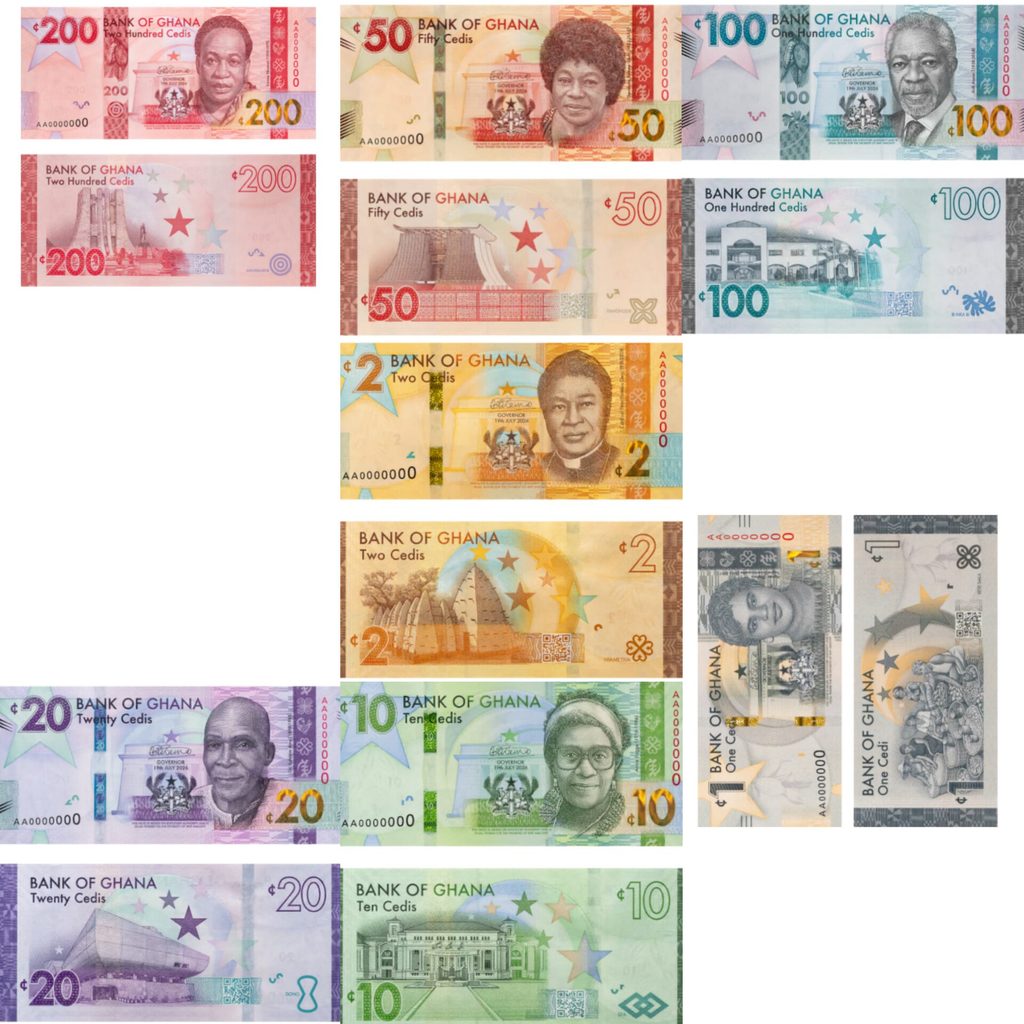
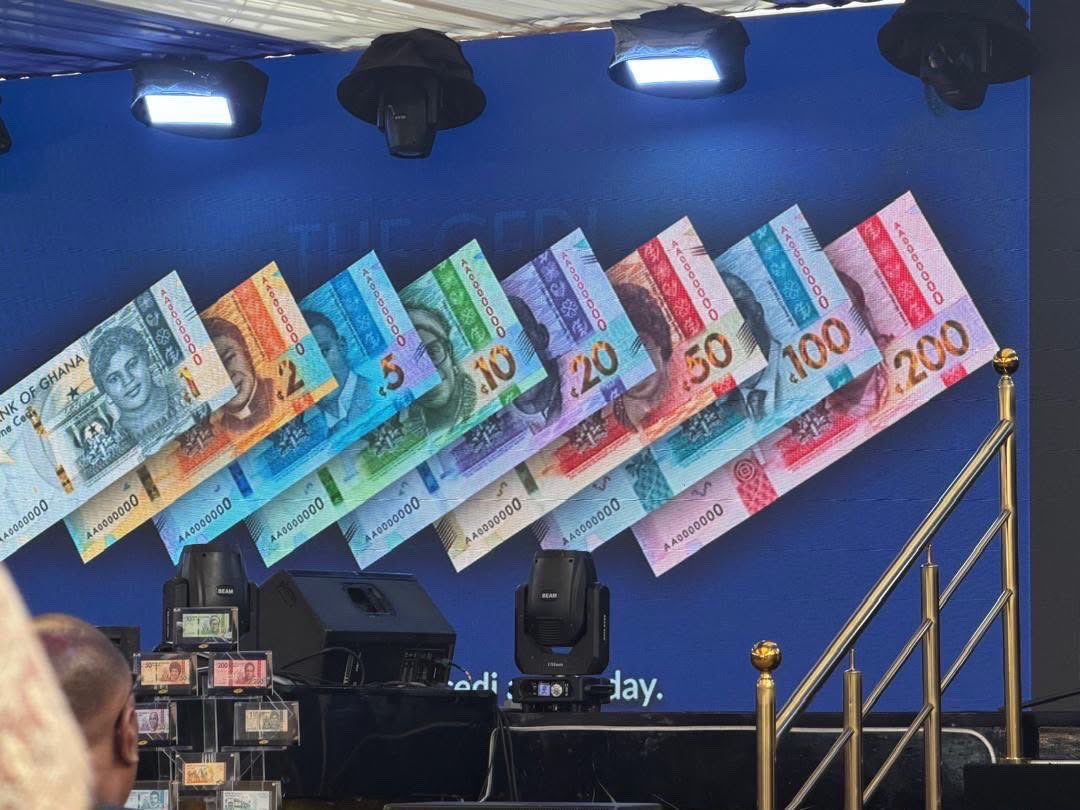
Ghana’s currency is set to tell a deeper story about the country’s history, culture and national identity following the introduction of a new Heritage Series of cedi banknotes by the Bank of Ghana.
The new banknotes go beyond their traditional role as a medium of exchange. They recognise prominent Ghanaian personalities whose contributions have helped shape the country’s political, educational, cultural, religious and social development.
From the struggle for independence to the promotion of peace, education, justice, religious tolerance and women’s empowerment, the Heritage Series places the achievements of distinguished Ghanaians into the hands of the public.
At the centre of the series is Ghana’s first Prime Minister and President, Dr Kwame Nkrumah, whose portrait features on the GH¢200 note.
Nkrumah led Ghana to independence from British colonial rule on March 6, 1957, becoming a central figure in the country’s political history and the wider African liberation movement. His appearance on the highest denomination reflects his enduring influence on Ghana’s independence story and the ideals of self-determination.
The popular expression, “Mo Kwame Nkrumah No Never Dies,” continues to reflect the lasting place of his legacy in the country’s national consciousness.
The GH¢100 note features former United Nations Secretary-General Kofi Annan, a Ghanaian diplomat whose contribution to international peace and diplomacy earned him the 2001 Nobel Peace Prize.
His inclusion highlights Ghana’s role in international cooperation, conflict resolution and peacekeeping. It also draws attention to the importance of peaceful coexistence in building stable communities and societies.
The GH¢50 note celebrates Theodosia Salome Okoh, the artist, teacher and stateswoman who designed Ghana’s national flag.
Her contribution gave the country one of its most recognisable national symbols, representing Ghana’s identity, unity and national pride. Her appearance also recognises the important role women have played in shaping the country’s history.
On the GH¢20 note is Dr Ephraim Amu, the celebrated composer, musicologist and cultural advocate. He is widely remembered for composing the patriotic Twi song, Yɛn Ara Asaase Ni.
Through his music and commitment to Ghanaian cultural heritage, Amu helped promote indigenous traditions and national consciousness. His recognition highlights the importance of music, artistic expression and cultural preservation in passing Ghana’s identity from one generation to another.
The GH¢10 note features Justice Annie Jiagge, a pioneering Ghanaian jurist and women’s rights advocate. She became the first female judge in Ghana and the Commonwealth of Nations.
Her contribution to the legal profession and the advancement of women’s rights represents the values of fairness, equal opportunity and access to justice. Her recognition also serves as a reminder of the role women have played in breaking barriers within traditionally male-dominated institutions.
The GH¢5 note honours Dr James Emmanuel Kwegyir-Aggrey, a renowned educator, missionary and co-founder of Achimota School.
He was a strong advocate for education, particularly the education of girls, and believed that education was essential to individual and national development. His inclusion reflects Ghana’s commitment to knowledge, learning and creating opportunities for future generations.
The GH¢2 note features Cardinal Peter Porekuu Dery, a prominent Catholic leader from northern Ghana who became the country’s first cardinal from the north.
His contributions to religious freedom, education and community development, dating back to the 1950s, make his recognition particularly significant. His presence on the note also highlights the importance of religious tolerance, mutual respect and peaceful coexistence among people of different faiths.
Completing the series is Madam Agnes Oforiwa Tagoe-Quarcoopome, whose portrait appears on the GH¢1 note.
A pioneering market leader, she is recognised for her contribution to women’s economic empowerment and her historic achievement as the first market woman to open a bank account with the former Standard Bank of West Africa.
Her inclusion brings attention to the contribution of market women and informal-sector workers to Ghana’s economy. It also recognises the role of financial inclusion in empowering individuals and supporting economic progress.
Beyond the personalities, the Heritage Series incorporates Adinkra symbols and other cultural elements to communicate values that are central to Ghanaian society.
The Dono symbol, inspired by the talking drum, represents rhythm, music and performance, connecting the country’s artistic traditions with the GH¢20 note featuring Dr Ephraim Amu.
The Fawohodie symbol, associated with freedom and independence, reflects the spirit of nationalism and self-determination. Its message connects with the GH¢50 note and the contribution of Theodosia Salome Okoh to Ghana’s national identity.
The Bese Saka symbol, which represents wealth, abundance and prosperity, reinforces the importance of economic progress and shared prosperity. The GH¢100 note, featuring Kofi Annan, also brings attention to the relationship between peace, stability and development.
Other cultural symbols reinforce the importance of religious heritage, education, justice and equality. Through these elements, the banknotes communicate values that extend beyond the individuals whose portraits appear on them.
The inclusion of these personalities is also significant because it broadens public recognition of Ghana’s history. While political leaders and prominent diplomats have often dominated national historical discussions, the series gives attention to educators, artists, jurists, religious leaders and women whose contributions have helped shape society.
By featuring these individuals across different denominations, the Bank of Ghana presents a wider picture of national achievement and encourages citizens to appreciate the different people and institutions that have contributed to the country’s development.
The introduction of enhanced security features and redesigned banknote elements also reflects the importance of maintaining confidence in the national currency while adapting it to changing demands.
Ultimately, Ghana’s new Heritage Series cedi notes represent more than a redesign of the country’s money. They provide an opportunity to educate the public about national history, celebrate distinguished contributions and preserve cultural values.
Every time a Ghanaian handles one of these notes, they encounter a reminder of the people, sacrifices, ideas and achievements that have helped shape the nation.
The Heritage Series therefore carries a powerful message: Ghana’s wealth is not measured only by its natural resources and economic strength, but also by the people, culture, history and values that define its identity.