By: Kenneth Appiah Bani
Mali’s deepening security crisis has taken an even more alarming turn, with new details emerging about the scale, coordination, and brutality of recent attacks across the country. What began as a wave of synchronized assaults has evolved into one of the most significant and complex offensives in Mali’s recent history, raising urgent concerns about state stability, civilian safety, and the broader security outlook of the Sahel.
The latest developments follow the circulation of disturbing footage sent to Ancempire Radio, allegedly showing the killing of foreign nationals and the severing of a human head. The material was further corroborated by a national currently living in Mali, who also shared additional images and accounts. Another video reportedly shows individuals being dragged along the ground, reinforcing fears about escalating violence and the targeting of civilians. While independent verification remains limited, the consistency of these reports points to a worsening humanitarian situation.
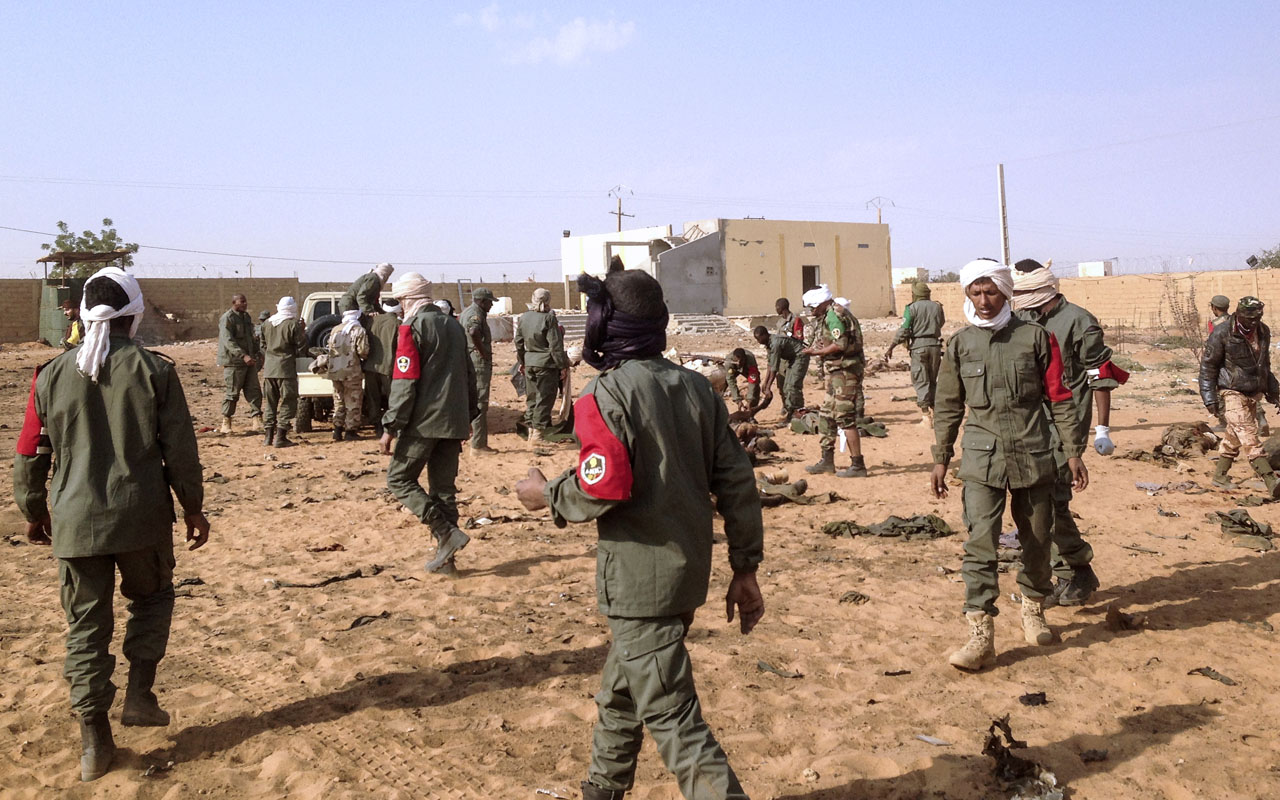
At the core of the crisis is a highly coordinated offensive launched in the early hours of April 25, 2026. At approximately 5:20 a.m., at least seven major locations including Bamako, Kati, Mopti, Sévaré, Gao, Bourem, and Kidal were attacked simultaneously. Security analysts have described the operation as the largest coordinated assault against the Malian state since 2012, underscoring a new level of sophistication among armed groups.
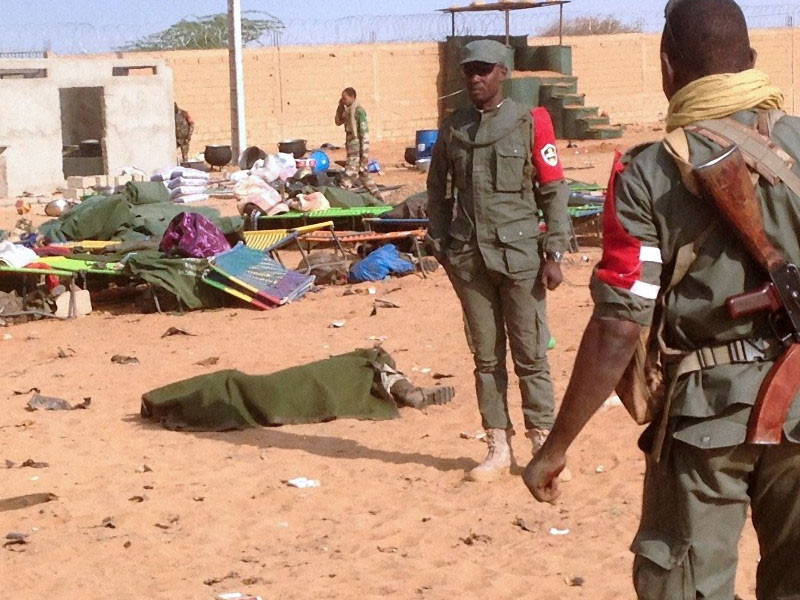
The violence dealt a major blow to Mali’s leadership. Reports indicate that Defence Minister Sadio Camara was killed in a car bomb explosion at his residence in Kati, with members of his family also injured. His death represents a significant loss for the government of Assimi Goïta, given Camara’s central role in military strategy and international security partnerships.
In the north, the situation appears particularly dire. Kidal has reportedly fallen under the control of the Azawad Liberation Front and Jama’at Nusrat al-Islam wal-Muslimin (JNIM), an affiliate of Al-Qaeda. Additional northern locations, including Aguelhok and Tessalit, are also said to have been captured, pointing to a rapid expansion of rebel influence.
At Kidal, Malian forces and Russian Africa Corps personnel were reportedly besieged within a former UN base. In a significant development, Russian fighters are said to have negotiated their withdrawal directly with rebel forces, leading to the evacuation of hundreds of personnel under escort. Malian soldiers who remained were reportedly taken prisoner, highlighting the precarious position of government forces in contested territories. Subsequent confirmation of the withdrawal by Russian authorities has further underscored the shifting dynamics on the ground.
Meanwhile, the crisis has extended beyond direct combat into economic and logistical warfare. On April 28, JNIM reportedly declared a blockade on all major routes leading into Bamako, placing renewed pressure on the capital’s supply chains. This comes in the context of an earlier fuel blockade that had already strained economic activity since late 2025, raising concerns about prolonged hardship for civilians.
Despite the scale of the crisis, President Assimi Goïta addressed the nation several days after the attacks began, stating that the situation was “under control.” However, ongoing clashes, territorial losses, and the emergence of disturbing civilian-targeted violence suggest a far more complex reality on the ground.
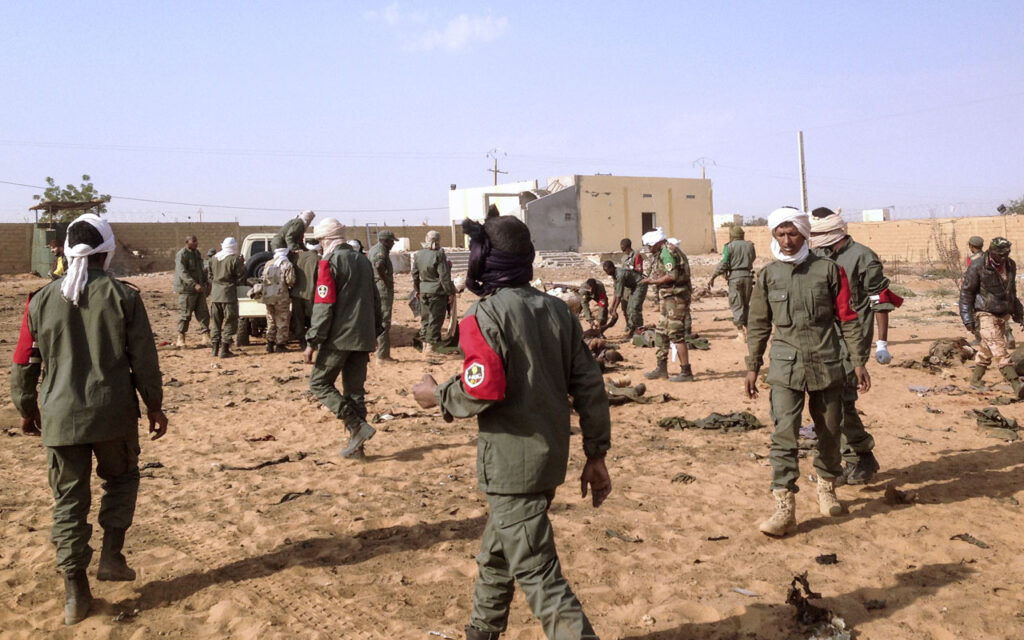
The involvement of both separatist and jihadist groups in a coordinated offensive marks a significant evolution in Mali’s conflict. The apparent collaboration between the Azawad Liberation Front and JNIM has amplified the reach and impact of the attacks, combining territorial ambitions with extremist strategies.
The humanitarian implications are severe. Reports of killings, mutilations, and abuse alongside videos showing individuals being dragged and brutalized paint a grim picture of conditions in conflict-affected areas. Such acts, if confirmed, would constitute serious violations of international humanitarian law and intensify calls for accountability.
International concern continues to grow. António Guterres has previously warned about the escalating threat of extremism in the Sahel, while regional bodies such as the African Union and the Economic Community of West African States face increasing pressure to respond decisively.
Ultimately, Mali now stands at a critical crossroads. The convergence of large-scale coordinated attacks, leadership losses, territorial shifts, and rising civilian-targeted violence signals a dangerous phase in the country’s conflict. As the situation continues to evolve, the need for coordinated security responses, humanitarian intervention, and credible information verification remains more urgent than ever.
In solidarity with the people of Mali, the unfolding crisis serves as a stark reminder of the enduring challenges in confronting terrorism, insurgency, and political instability in the Sahel region.
Video credit: Aljazeera
Watch the video below: