By: Kenneth Appiah Bani
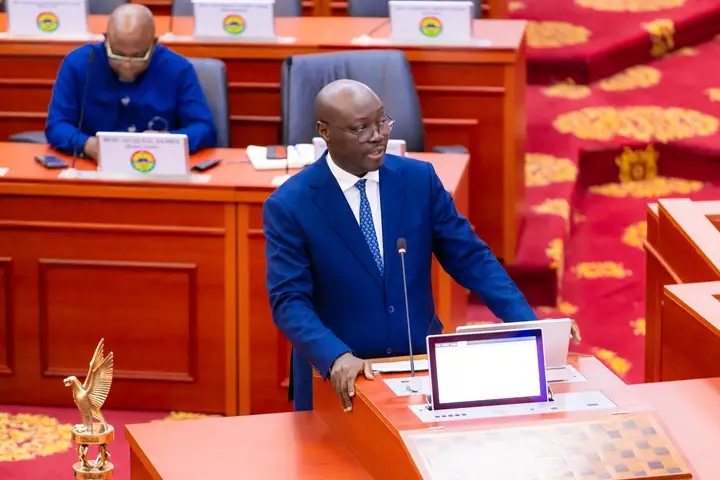
Ghana’s Minister for Finance, Cassiel Ato Forson, has announced that Ghana will no longer require financial bailouts from the International Monetary Fund (IMF) in the foreseeable future following significant economic recovery and fiscal stabilization.
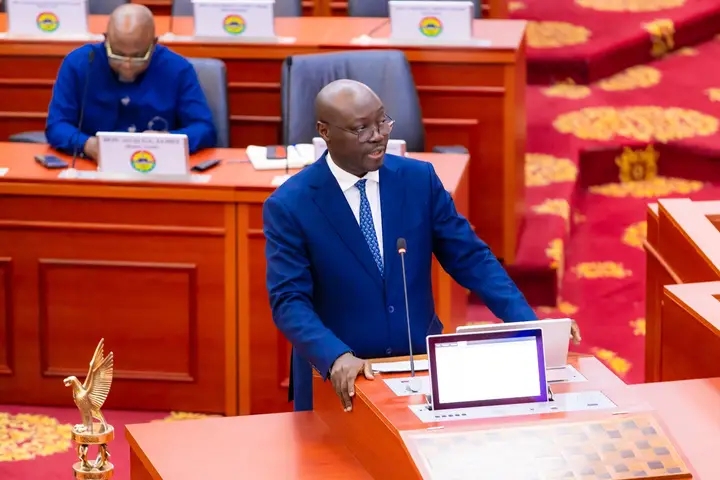
Addressing Parliament, the Finance Minister stated that Ghana has moved “from crisis management to stability” and from “dependence on financial bailout to partnership in reform,” describing the development as a major milestone under President John Dramani Mahama’s Reset Agenda.
Hon. Ato Forson explained that Ghana’s economic crisis in 2022 forced the previous administration to seek IMF assistance after the economy was hit by severe fiscal challenges, rising debt levels, high inflation, rapid cedi depreciation, and loss of investor confidence.
According to him, the country lost access to the international capital market after repeated downgrades by global credit rating agencies, while inflation exceeded 50 percent during the peak of the crisis.
The Finance Minister also referenced the introduction of the Domestic Debt Exchange Programme (DDEP) in December 2022, which imposed haircuts on domestic bondholders, including pension funds, financial institutions, and individual investors.
He noted that ordinary Ghanaians suffered heavily during the period through rising living costs, erosion of savings, job losses, business difficulties, and the introduction of taxes such as the E-Levy, Betting Tax, COVID-19 Levy, and Emissions Tax.
Hon. Ato Forson told Parliament that upon assuming office, President Mahama’s administration implemented several reforms aimed at restoring macroeconomic stability and rebuilding investor confidence.
The measures included stricter public financial management systems, amendments to fiscal responsibility laws, the establishment of an Independent Fiscal Council, operationalization of a sinking fund, renegotiation of Independent Power Producer agreements, and reductions in the size of government.
According to the Finance Minister, the reforms have produced positive economic outcomes.
He disclosed that Ghana recorded a 6.0 percent real GDP growth in 2025, while non-oil GDP growth reached 7.6 percent — the highest in 14 years.
Hon. Ato Forson further stated that Ghana’s economy crossed the US$100 billion mark for the first time in 2025, making it the eighth largest economy in Africa.
He added that inflation dropped from 23.8 percent in December 2024 to 3.4 percent in April 2026, while the public debt-to-GDP ratio reduced from 61.8 percent in 2024 to 44.7 percent in 2025.
The Minister also highlighted the appreciation of the cedi by 40.7 percent against the US dollar in 2025, alongside significant reductions in Treasury bill rates and the monetary policy rate.
Addressing Parliament, Hon. Ato Forson emphasized that the achievements demonstrate that “fiscal prudence and discipline always deliver results.”
He further announced that Ghana has successfully concluded the final review of the current IMF Extended Credit Facility programme, pending approval by the IMF Executive Board.
According to him, Ghana’s future engagement with the IMF will transition into a non-financing Policy Coordination Instrument (PCI), which focuses on reforms, policy monitoring, and investor confidence rather than financial support.
The Finance Minister explained that the PCI framework would help Ghana maintain economic discipline and strengthen its credibility with investors and development partners without depending on IMF bailout funds.
“In other words, Ghana has moved from the intensive-care unit (ICU) to the wellness center,” he told Parliament.
Hon. Ato Forson also revealed that the government is preparing a new economic framework dubbed “The New Economy,” which will be unveiled in the 2027 Budget to drive long-term transformation, job creation, productivity, and inclusive economic growth.
He concluded by expressing gratitude to Ghanaians for their patience and sacrifices during the economic crisis, assuring citizens that the government remains committed to building a stronger and more resilient economy.