By: Kenneth Appiah Bani
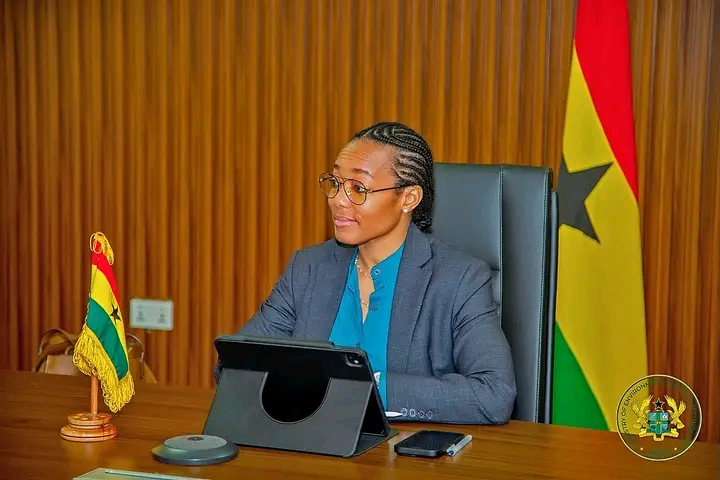
The growing concern over sexual abuse involving children in Ghana’s educational institutions has reignited calls for stronger child protection measures, with the Minister for Environment, Science and Technology and Member of Parliament for Klottey Korle, Dr Zanetor Agyeman-Rawlings, urging Parliament to establish a national sex offenders register to protect children and ensure that individuals convicted of sexual offences are held accountable.
Speaking on the floor of Parliament on Tuesday, November 10, 2026, Dr Agyeman-Rawlings expressed deep concern about the disturbing circumstances under which children, who should be protected by adults and institutions, continue to become victims of sexual abuse.
She questioned how society had reached a point where innocent children could be sexually abused by individuals entrusted with their safety and upbringing, yet such incidents were sometimes treated as though they were normal occurrences.
Her remarks come at a time when allegations of sexual misconduct involving students and a headmaster at Obuasi Senior High Technical School have attracted significant national attention, raising questions about the safety of students, institutional accountability and the effectiveness of existing child protection systems.
The controversy has also renewed discussions about the responsibility of schools, parents, religious organisations, traditional authorities and government institutions in ensuring that children are protected from sexual exploitation.
For Dr Agyeman-Rawlings, the issue goes beyond individual cases. It reflects a broader challenge that requires deliberate national intervention, stronger laws and a change in society’s attitude towards sexual offences against children.
A National Sex Offenders Register: The Proposed Solution
At the centre of Dr Agyeman-Rawlings’ parliamentary intervention was her call for the urgent establishment of a national sex offenders register, supported by a comprehensive legal framework.
She believes such a register would provide an important mechanism for identifying individuals convicted of sexual offences, monitoring offenders and preventing them from gaining access to vulnerable children through institutions such as schools and other organisations.
According to the minister, Ghana cannot continue to depend solely on public condemnation whenever a sexual abuse case becomes a national discussion. Instead, the country must develop practical systems capable of preventing repeat offences and ensuring that those found guilty face the full consequences of their actions.
She called on Parliament and relevant state institutions to urgently consider the proposal and strengthen existing child protection arrangements.
A properly established register could also assist authorised institutions in conducting background checks before employing individuals in positions that involve regular contact with children.
This would be particularly important for schools, childcare centres, religious institutions and organisations that work directly with minors.
However, the proposal would require clear legislation defining who qualifies for inclusion, which institutions can access the information, how records would be maintained and what safeguards would prevent the wrongful identification of individuals who have not been convicted.
The Danger of Transferring Accused Teachers Between Schools
One of the major concerns raised by Dr Agyeman-Rawlings was the practice of transferring teachers from one educational institution to another when credible allegations of sexual abuse emerge.
She questioned the justification for moving an individual accused of abusing students to another school without properly addressing the allegations, warning that such decisions could expose other children to potential danger.
“We cannot simply transfer a teacher from one school to another when credible allegations of sexual abuse emerge, potentially exposing other groups of children to danger,” she stressed.
Her position highlights an important weakness in institutional responses to sexual misconduct.
Schools are expected to provide safe learning environments where students can develop academically, socially and emotionally. Teachers and other school authorities occupy positions of trust and are expected to demonstrate professionalism and responsibility in their dealings with students.
When allegations of sexual abuse arise, the priority should be the safety of students, the protection of potential victims and a thorough investigation.
Administrative transfers alone cannot resolve criminal allegations. Neither should institutional reputation be placed above the safety and welfare of children.
While allegations must be investigated fairly and accused persons must be afforded due process, school authorities have a responsibility to take appropriate precautionary measures to prevent further exposure of students to possible harm.
The proposed national register could therefore become part of a wider system of background screening, institutional accountability and child safeguarding.
Culture of Silence, Intimidation and Interference
Beyond the reported incidents of sexual abuse, Dr Agyeman-Rawlings expressed concern about the culture of silence, intimidation and interference that sometimes surrounds cases involving children.
In many communities, victims and their families may face pressure to remain silent, withdraw complaints or settle matters privately.
Fear of public embarrassment, social stigma, threats, financial considerations and concerns about damaging family or institutional reputations can discourage victims from seeking justice.
For children, the situation can be particularly difficult because they may depend on adults for protection, financial support and emotional reassurance.
Some may struggle to speak about their experiences, especially when the alleged offender is someone they know, respect or depend on.
The minister’s concerns also draw attention to the role of influential individuals who may use their positions to interfere with criminal investigations.
She specifically called on religious and traditional leaders, as well as other influential personalities, to stop visiting police stations to seek the discontinuation of cases involving sexual offences against children.
Her warning raises questions about the relationship between social influence and the administration of justice.
Religious leaders, traditional authorities and respected community figures have important responsibilities in promoting peace, morality and social development. However, their influence should never be used to protect individuals facing credible allegations of sexual abuse or to pressure victims and their families into abandoning legitimate complaints.
The protection of children must take precedence over personal relationships, religious affiliations, family connections and institutional interests.
The Lasting Consequences of Sexual Abuse
Sexual abuse during childhood can have consequences that extend far beyond the period in which the incident occurs.
Survivors may experience emotional distress, anxiety, depression, difficulties with trust, social withdrawal and challenges in maintaining healthy relationships.
For some victims, the effects can continue into adulthood, influencing their education, confidence, personal development and ability to participate fully in society.
The impact may also extend to families, particularly when victims are not believed or when relatives become divided over how allegations should be handled.
In educational settings, sexual abuse can undermine students’ sense of security and affect their ability to concentrate, attend classes and pursue their academic ambitions.
A school should be a place where children feel protected, respected and encouraged to achieve their potential. When individuals in positions of authority allegedly exploit their responsibilities, that trust is seriously undermined.
This is why child protection cannot be treated as an occasional public discussion. It must become an essential part of the management and operation of every institution responsible for children.
Parents must also be confident that when they send their children to school, those children are entering an environment where their safety is taken seriously.
Obuasi SHS Case Brings Child Protection Debate Into Focus
Dr Agyeman-Rawlings’ call comes amid public concern over allegations involving female students and the headmaster of Obuasi Senior High Technical School, Zakaria Abdulai.
The allegations attracted widespread attention following an investigative report by JoyNews journalist Manasseh Azure Awuni, which detailed claims of sexual harassment, assault and rape involving students.
The Ghana Education Service subsequently interdicted the headmaster on October 14, 2026, to allow investigations into the matter.
During proceedings in Parliament on November 10, Education Minister Haruna Iddrisu reportedly told the House that investigations into the allegations were approximately 85 per cent complete, with evidence gathered so far pointing to a possible case for prosecution.
The number of students making allegations was also reported to have increased to 19.
The headmaster has denied the allegations, and the claims must be subjected to the appropriate investigative and judicial processes.
Nevertheless, the case has brought renewed attention to the responsibility of educational authorities to establish effective reporting systems and ensure that students can raise concerns without fear of intimidation or retaliation.
It has also raised questions about whether existing school supervision and disciplinary arrangements are sufficient to identify and address misconduct before it escalates.
The wider concern is that sexual abuse may go undetected when students are afraid to report incidents or believe that their complaints will not be taken seriously.
Ghana Cannot Depend on Laws Alone
Dr Agyeman-Rawlings also challenged the country’s tendency to celebrate the passage of laws and the ratification of international conventions without translating those commitments into practical protection for vulnerable people.
She argued that Ghana’s commitment to children’s welfare must be reflected in the actions of public institutions and individuals responsible for enforcing the law.
The country has existing legal provisions criminalising sexual offences, including rape and defilement under the Criminal and Other Offences Act, 1960 (Act 29).
However, the existence of legislation does not automatically guarantee that victims will receive justice or that potential offenders will be prevented from accessing vulnerable children.
Effective enforcement requires cooperation among the police, the justice system, educational authorities, social welfare institutions, health professionals and families.
It also requires adequate resources for investigations, victim support services, public education and the implementation of child protection policies.
A national sex offenders register would therefore need to operate alongside these existing mechanisms rather than become a substitute for effective policing and prosecution.
What Ghana Needs Beyond a Sex Offenders Register
Although the proposed register could provide an important additional safeguard, experts and policymakers would need to consider a broader framework to address the different circumstances under which children experience sexual abuse.
First, educational institutions should introduce stronger background screening procedures for teachers, non-teaching staff, volunteers and other individuals whose responsibilities involve direct contact with children.
Second, schools should establish confidential reporting channels through which students can report sexual harassment, inappropriate behaviour and abuse without fear of punishment or victimisation.
Third, allegations should be referred promptly to the appropriate investigative authorities, while institutions take lawful precautionary measures to protect students.
Fourth, victims and their families should have access to counselling, medical care, legal assistance and other forms of support necessary for recovery.
There must also be stronger public education to help children understand inappropriate behaviour, recognise situations that threaten their safety and identify trusted adults they can approach when they need help.
Parents and guardians must equally be encouraged to listen to children, take their complaints seriously and avoid dismissing reports of abuse because of the identity or social standing of the person involved.
Importantly, any national register must be guided by clear legal safeguards. It should distinguish between individuals convicted of sexual offences and those merely accused of wrongdoing. Access should be regulated, information protected and procedures established for correcting inaccurate records.
Without these safeguards, a system intended to protect children could create opportunities for abuse, misinformation and wrongful identification.
A Collective Responsibility to Protect Children
The responsibility to protect children cannot be left to Parliament, the police or educational authorities alone.
Families, religious organisations, traditional institutions, civil society groups, community leaders and the media all have roles to play in creating an environment where sexual abuse is neither tolerated nor concealed.
The media, in particular, must continue to investigate and report cases of child abuse responsibly, ensuring that victims’ identities and privacy are protected.
Investigative journalism can expose institutional failures, bring hidden cases into public discussion and encourage authorities to act. However, reporting must avoid sensationalism and ensure that survivors are not subjected to further humiliation.
Religious and traditional leaders must also recognise that protecting a community’s reputation cannot be more important than protecting its children.
Where credible allegations arise, the appropriate response should be to encourage reporting, cooperate with investigations and allow the law to take its course.
Forgiveness, reconciliation and private settlements should never be used to obstruct criminal justice or silence victims.
The Question Ghana Must Answer
Dr Agyeman-Rawlings’ intervention in Parliament has placed an important question before the country: how many more children must suffer before child protection becomes a national priority rather than a conversation that resurfaces whenever another disturbing case makes the headlines?
Her call for a national sex offenders register represents a demand for a more structured approach to identifying convicted offenders, strengthening institutional accountability and preventing individuals from moving between environments where they may gain access to vulnerable children.
Ultimately, the effectiveness of such a proposal will depend on the political will to establish it, the legal framework supporting its operation and the commitment of relevant institutions to enforce its provisions.
Ghana must also confront the attitudes that allow sexual abuse to be hidden, victims to be intimidated and influential individuals to interfere with the pursuit of justice.
Children should not have to demonstrate extraordinary courage simply to feel safe in their classrooms, homes, churches and communities.
They deserve an environment where their rights are respected, their voices are heard and their safety is protected.
As Dr Agyeman-Rawlings urged Parliament, Ghana must move beyond repeated expressions of outrage and take concrete steps to restore accountability.
The protection of children must never be sacrificed to protect the reputation of an individual, a family, a school or an institution.
The real measure of Ghana’s commitment to child protection will not be how loudly the country condemns sexual abuse when another case emerges, but how effectively it prevents such abuse, protects survivors and ensures that those found guilty are held accountable.