
By: Kenneth Appiah Bani
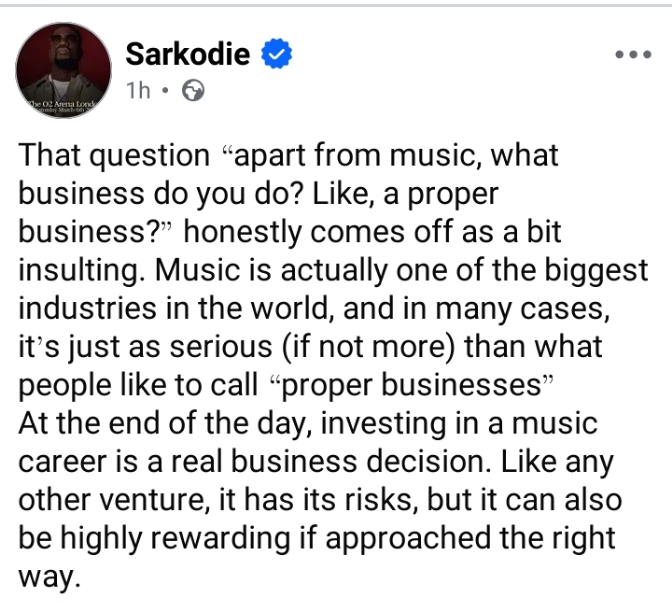
Ghanaian rapper Sarkodie has sparked fresh conversation about how society values creative careers, following a candid social media post addressing a question he finds dismissive: “Apart from music, what business do you do? Like, a proper business?”
According to the award-winning artist, framing music as something separate from “real” business reflects a deep misunderstanding of the industry’s scale, structure, and economic impact. He argues that music is not only a legitimate profession but also one of the largest and most influential industries globally.
“Music is actually one of the biggest industries in the world,” he noted, emphasizing that it demands the same if not greater level of seriousness, investment, and strategic planning as traditional ventures often labeled as “proper businesses.”
Sarkodie’s remarks tap into a broader societal perception, particularly in many African contexts, where careers in entertainment are still sometimes viewed as unstable or secondary to conventional professions like law, medicine, or commerce. This perception persists despite the rapid commercialization and globalization of creative sectors.
From streaming revenues and brand endorsements to international tours and licensing deals, modern music operates within a sophisticated economic framework. Artists today are not just performers; they are entrepreneurs managing brands, negotiating contracts, and building long-term financial ecosystems.
The rapper further stressed that choosing a music career is a calculated business decision. Like any enterprise, it carries risk but also the potential for significant returns when approached strategically.
“At the end of the day, investing in a music career is a real business decision,” he explained, adding that success in the field requires discipline, innovation, and a clear understanding of the market.
Industry analysts support this view, pointing out that the global music market continues to grow, driven by digital platforms, social media influence, and expanding audiences. In Ghana and across Africa, artists are increasingly leveraging these tools to reach international markets and generate sustainable income.
Sarkodie’s statement resonates with many creatives who continue to face skepticism about their career choices. His message challenges audiences to rethink outdated definitions of success and legitimacy in today’s evolving economy.
By asserting the value of music as a “proper business,” Sarkodie not only defends his profession but also advocates for a broader recognition of creative industries as vital contributors to economic growth and cultural identity.
As conversations around employment and entrepreneurship shift in the digital age, voices like his are helping redefine what it means to build a successful and respectable career.